- 13 January, 2026
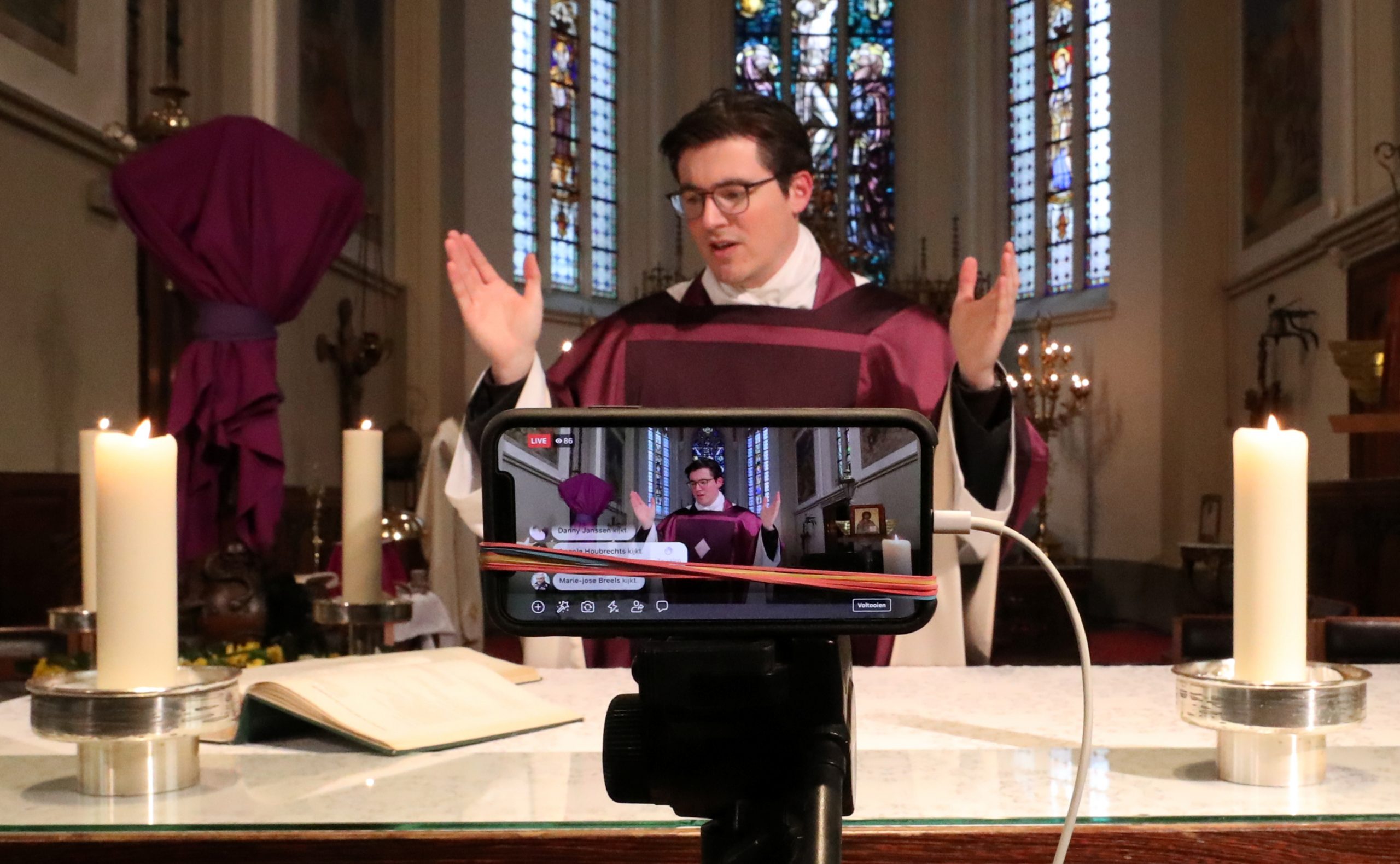
Jan 13, 2026: In the last decade, priests and consecrated religious have stepped into the digital world with an eagerness that has transformed the landscape of pastoral communication. What was once a simple tool for announcements and catechism has become a vast mission field where homilies reach millions and spiritual reflections are shared faster than they can be preached. It is a moment of extraordinary possibility. Yet it is also a moment demanding brutal honesty, for the same platforms that amplify the Gospel can just as easily dilute consecration, distort mission and expose vulnerabilities the Church has long kept hidden.
The digital space today is not merely a medium; it is a culture, a psychological environment, a formation system—one that shapes its users even as they attempt to shape it. Many religious have embraced this world with admirable creativity, producing content that enlightens, heals, teaches, and evangelises.
Across India’s towns, megacities and remote tribal belts, a striking reality is unfolding: people now encounter faith more often through a screen than through a Sunday sermon. Online retreats, livestreamed liturgies and short spiritual videos have allowed priests and religious to reach the faithful—and the faith-curious—far beyond the geographical limits of their parishes or institutions. Perhaps, our non-Catholic brothers and sisters have used the digital advantage more than the Catholics. There are priests whose online homilies carry Scriptural wisdom to the bedridden, sisters whose digital catechesis reaches tribal children with no physical access to a parish and congregations using social media to advocate for justice, environmental protection and human rights. In a country as vast and diverse as India, where pastoral reach is often limited by geography and resource constraints, digital platforms have become essential bridges of compassion.





In a nation where millions experience spiritual isolation, digital evangelization is not an optional project but a national ministry. A young nun sharing a 60-second reflection on compassion may reach more hearts in one day than a large parish congregation sees in a week. A theologian explaining Church teachings on social justice in Hindi or Punjabi or Odia brings the Gospel to audiences historically underserved by English-dominant media.
India’s youth today face unprecedented emotional turbulence. Anxiety, loneliness and depression—once silenced—now spill onto social platforms. In this environment, priests and religious do provide something rare: a voice of hope, a listening presence and a message of dignity.
Online counselling initiatives, digital prayer circles and youth outreach projects have already shown how compassion can be mediated through technology. For young people wrestling with despair, a single reassuring response from a priest or sister on Instagram or YouTube can become a lifeline.
India’s consecrated communities have historically stood with the marginalised—Dalits, Adivasis, migrants, women and the poor. But in a media landscape dominated by corporate interests and political pressures, their stories often go unheard. Digital platforms of consecrated lives help bridge this silence.
A viral post on tribal displacement, a short documentary on trafficking survivors, a tweet calling attention to custodial violence etc by priests and religious can mobilize national awareness and pressure institutions into action. When religious communities document injustice with credibility, compassion and fact-checked accuracy, they strengthen the democratic fabric of the nation.
In a country where rumours spread faster than reason, religious harmony is fragile. Priests and religious, who have long played a mediating role in interfaith relations, can use digital platforms to explain, clarify and build bridges. A well-crafted video or article can counter misinformation that might otherwise inflame tensions. In a polarised digital landscape, their voices—if calm, informed, and empathetic—become instruments of national peace.
But if we stop at this optimistic narrative, we fool ourselves. The digital world has a shadow side and it is beginning to seep into convents, presbyteries, formation houses and pastoral ministries in ways that demand urgent attention. For every inspiring online initiative, there is also a painful counter-story: the priest whose videos become more about self-promotion than service; the sister struggling with digital addiction; the community meal where everyone is physically present but mentally scrolling; the retreat interrupted by notifications; the influencer-cleric whose brand grows while interior life withers. These realities are not isolated incidents. They are becoming patterns.
The phenomenon of the “celebrity priest” or “influencer nun” is a striking example. While many use their platforms responsibly, there is a danger of drift—slowly, subtly and often unconsciously—from ministry to performance. The metrics of mission start to resemble the metrics of the market: followers, views, monetisation, sponsorships, algorithm-friendly soundbites. When the desire to be seen overtakes the desire to serve, the digital apostolate mutates into a parallel vocation—one that risks reducing consecration to a brand.
This shift is usually not deliberate. It begins harmlessly: a few popular posts, a surge of comments, the intoxicating feeling of being “useful,” “appreciated,” “followed.” Algorithms reinforce this by rewarding visibility and punishing silence and without noticing it, priests and sisters begin adjusting their behaviour not to the values of the Gospel but to the demands of the platform. Prayer time shortens; screen time expands. Community responsibilities feel like interruptions. Silence feels like irrelevance. And slowly, the heart loses its centre.
Beyond the lure of popularity is the quieter, more dangerous crisis of digital addiction. Sisters scrolling reels past midnight. Young priests glued to their phones even in the sacristy. Seminarians distracted during prayer. A generation unable to sit in silence without the itch to check notifications. This is not merely a psychological issue; it is a spiritual emergency. Consecrated life is built on contemplation, interiority and disciplined attention. The digital world, by design, erodes attention and fragments consciousness. When those foundations crack, the consequences are devastating.
Equally troubling is the erosion of community life. Many superiors privately admit they are struggling to manage the digital addiction within their communities. In many convents and presbyteries, smartphones have become silent separators. Meals are accompanied not by conversation but by scrolling. Conflicts fester because people text one another instead of speaking to one another. The communal witness that once defined religious life weakens with every notification that pulls attention away from the person physically present. The irony is painful: technology meant to connect the world is disconnecting those who vowed to live in communion.
Formation houses, too, are struggling. Young candidates enter religious life deeply shaped by digital culture. Many lack the capacity for deep reading, sustained reflection or disciplined prayer. Silence feels foreign. Interiority feels uncomfortable. The seminary often becomes a battleground between the demands of digital culture and the demands of spiritual formation. Without structured digital formation, young religious are left to steer the most addictive technology ever created with little guidance and zero accountability.
None of this is an argument against digital engagement. The Church must be present where people are and people today live online. Digital media can be a powerful instrument of evangelisation, education, and justice. But it must be used with maturity, humility and spiritual grounding. Consecrated life without digital discipline is no longer possible. The question is not whether priests and religious should use digital platforms; the question is whether they can do so without losing themselves.
The deeper spiritual challenge is this: who is forming your heart—Christ or the algorithm? The algorithm rewards speed, noise and spectacle. Christ invites slowness, silence and depth. The algorithm wants followers. Christ wants disciples. The algorithm pushes self-promotion. Christ calls for self-emptying. When consecrated persons forget this distinction, their digital presence becomes hollow and their vocation becomes fragile.
To cross this terrain responsibly, priests and religious need clear, uncompromising digital guidelines. First, mission must always come before visibility; posting for likes is not evangelisation. Regular digital fasting hours are essential to protect prayer and inner stillness. Community time must be defended—no phones at meals, meetings or recreation. Emotional vulnerability must not be broadcast online; such sharing belongs in spiritual direction, not on social media. Online ministry must be authentic, not performative; the goal is to serve, not entertain. Every consecrated person must remember that their digital footprint is permanent—and so is the damage caused by a careless moment.
The digital world is a vast ocean of opportunity, but also of danger. Priests and religious must sail it not with naïve enthusiasm but with disciplined purpose. India needs their voices online—but only if those voices come from hearts rooted in prayer, humility and community. The challenge is not to avoid the digital world but to enter it without losing the soul of consecration. The Church does not need digital celebrities. It needs authentic witnesses who use technology without being consumed by it, who communicate Christ rather than themselves and whose presence online reflects the integrity of their vocation. Only then will their digital footprints lead others not into distraction, but towards God.
By Fr. Suresh Mathew Pallivathukal OFM Cap

© 2026 CATHOLIC CONNECT POWERED BY ATCONLINE LLP